Quiz/survey
FitMe Quiz/survey — 34-question personalization quiz
Why it works
The engine of the funnel. Thirty-four light taps build sunk-cost commitment while collecting the inputs (goals, body, habits, height/weight/age) that the paywall feeds back as a "personalized plan". Reassurance interstitials are threaded between question blocks to sustain momentum, and the numeric answers drive a computed BMI reveal near the end.
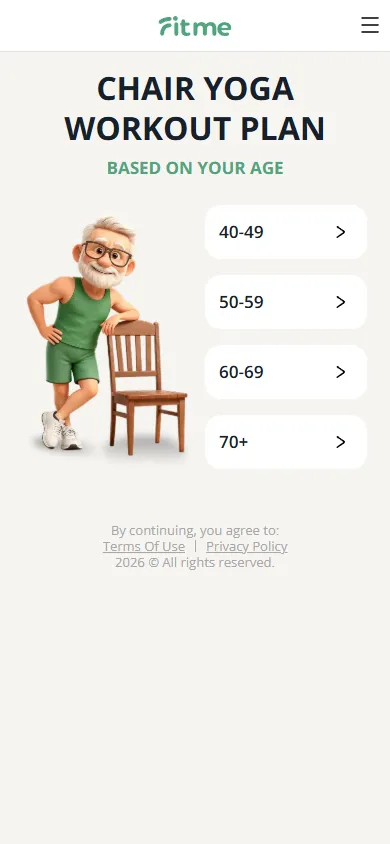
Pre-quiz hook — pick your age band under a "Chair Yoga Workout Plan" banner. Commitment starts before the /34 counter even appears. 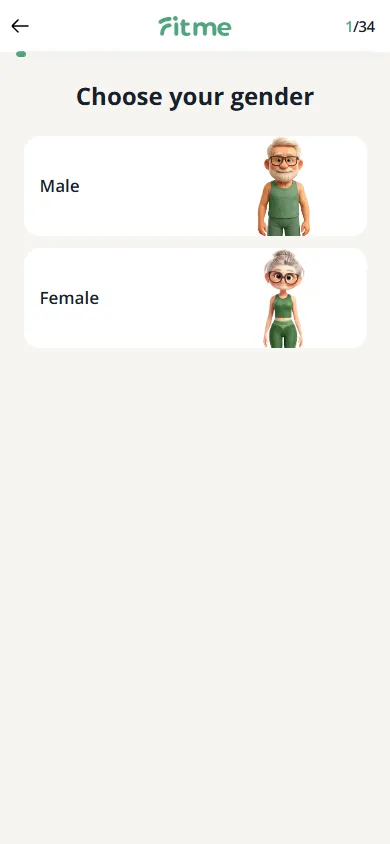
Question 1 — gender. A single tap that starts the progress bar and the sunk-cost climb. 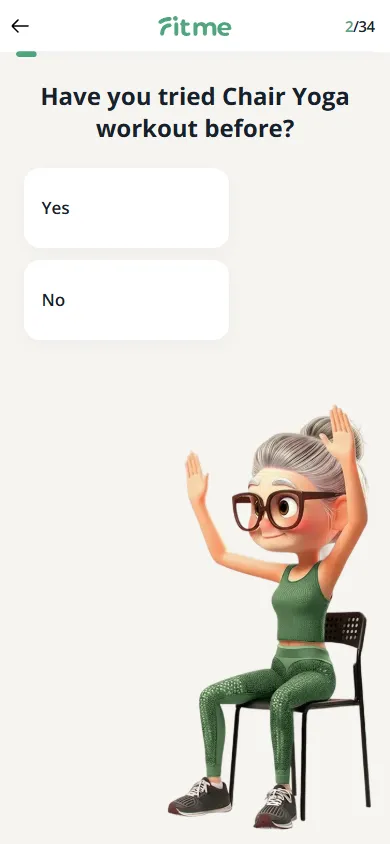
Prior experience with Chair Yoga — a yes/no that lets the plan later claim it "meets you at your level". 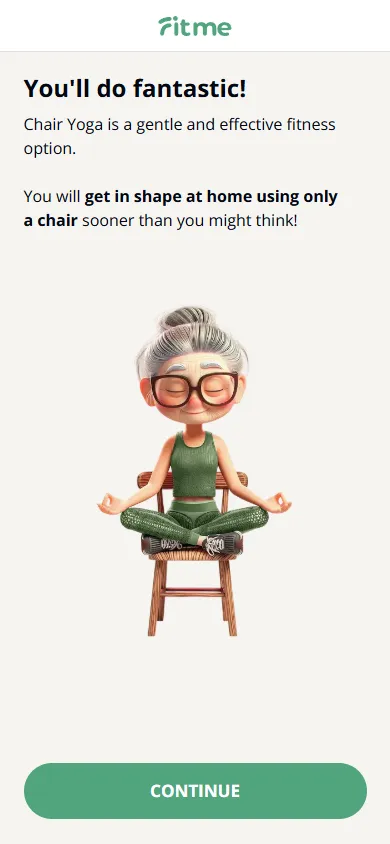
First reassurance interstitial ("You'll do fantastic!") — no question, just encouragement and momentum. 
Main goal (lose weight vs. maintain) — frames everything after as helping you, not qualifying you. 
Solution-fit interstitial — "we've got just the solution", tying Chair Yoga to the goal just chosen. 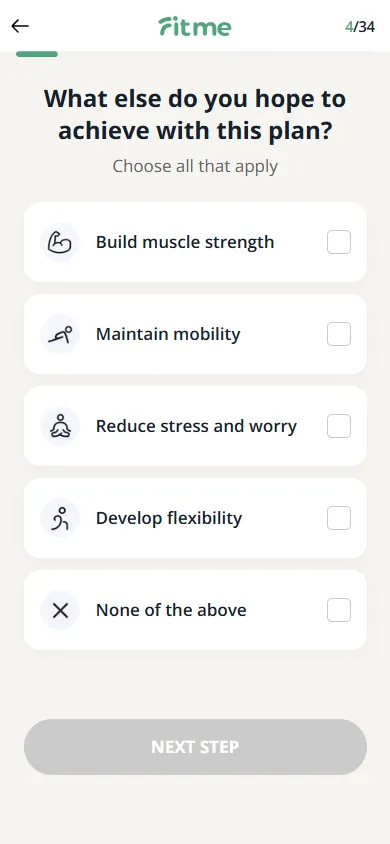
Secondary goals (multi-select) — widens the personalization surface the plan will echo back. 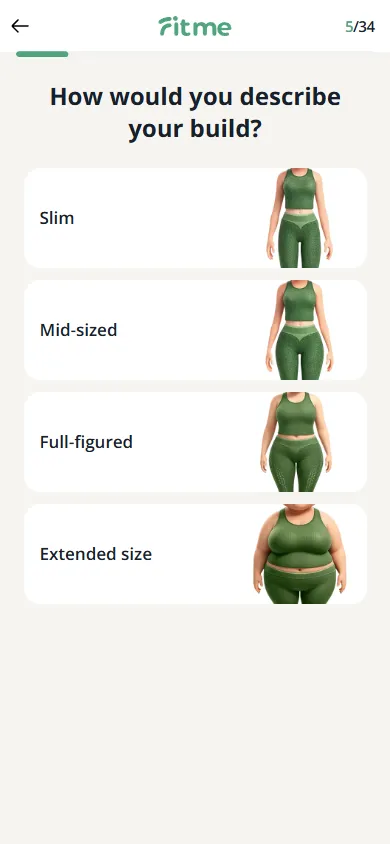
Self-described build — a soft body-image question that primes the before/after narrative. 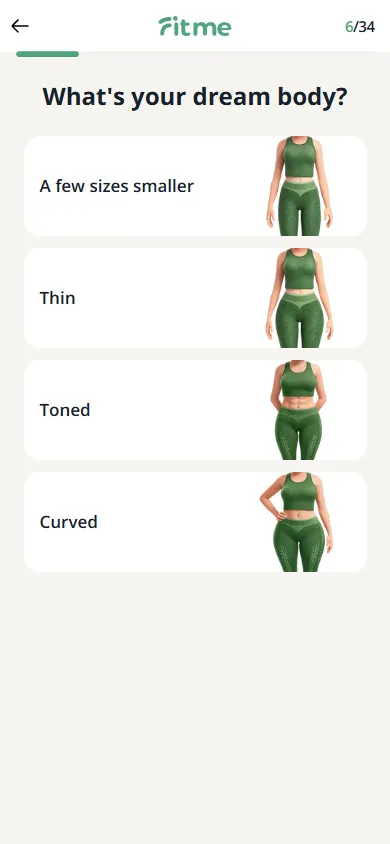
Dream body ("a few sizes smaller") — the moment the user states the outcome they're buying. 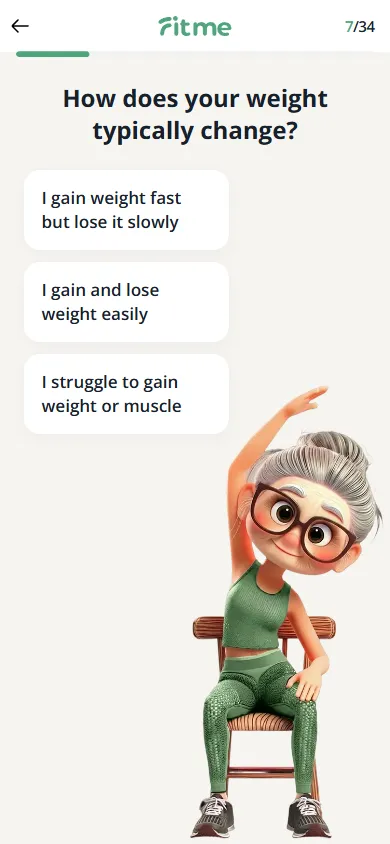
How your weight typically changes — surfaces the frustration the plan promises to solve. 
Progress interstitial — "drive your fitness progress with Chair Yoga", keeping the scent alive. 
When were you last in your best shape — a nostalgia hook that makes the goal feel recoverable. 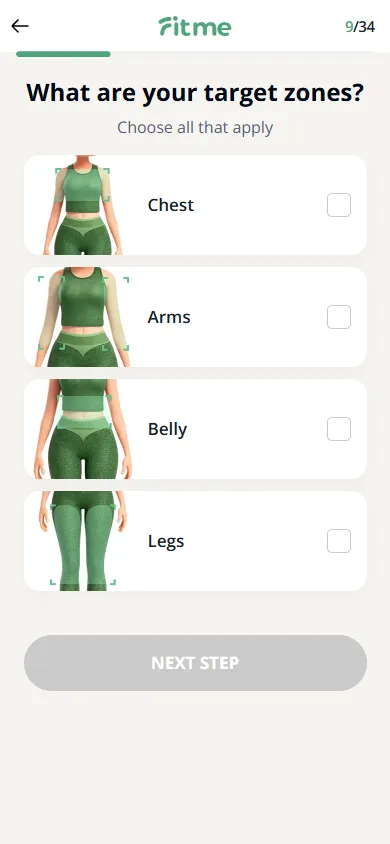
Target zones (multi-select, e.g. belly) — a concrete body map the plan will claim to "focus" on. 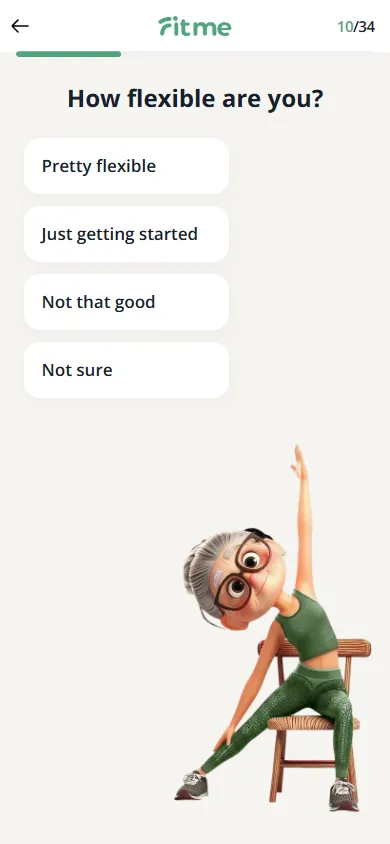
Flexibility self-rating — positions Chair Yoga as accessible even for beginners. 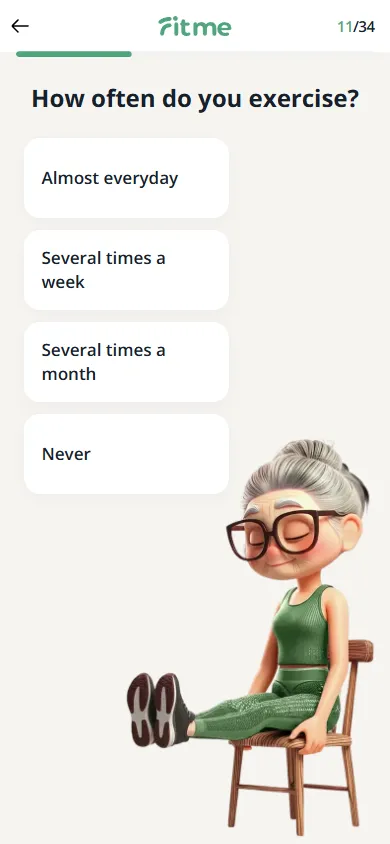
Exercise frequency — "never" answers justify a gentle, low-barrier program. 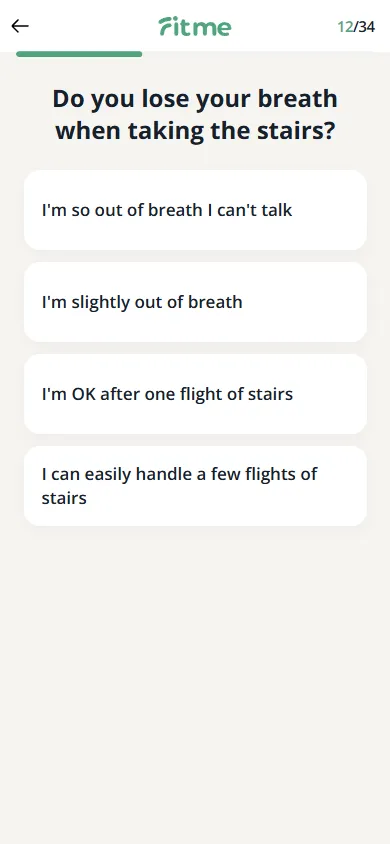
Cardio proxy (out of breath on stairs) — builds the case that low-impact is right for you. 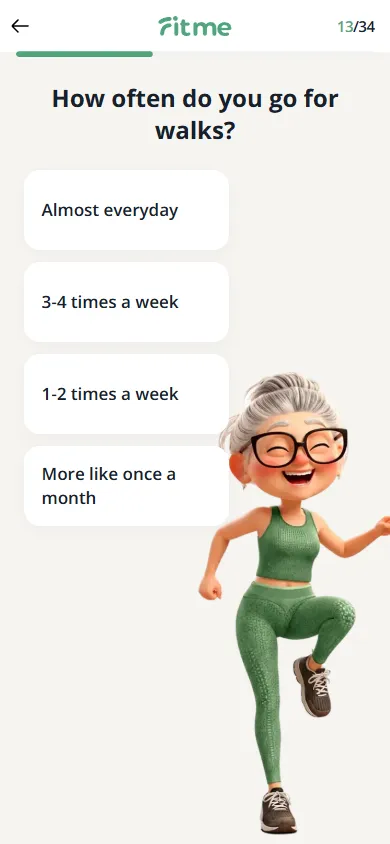
Walking frequency — another low-stakes activity input. 
Physical struggles / injuries (multi-select) — safety framing and another reason the plan is "tailored". 
"We got you!" interstitial — an empathy beat after the health questions. 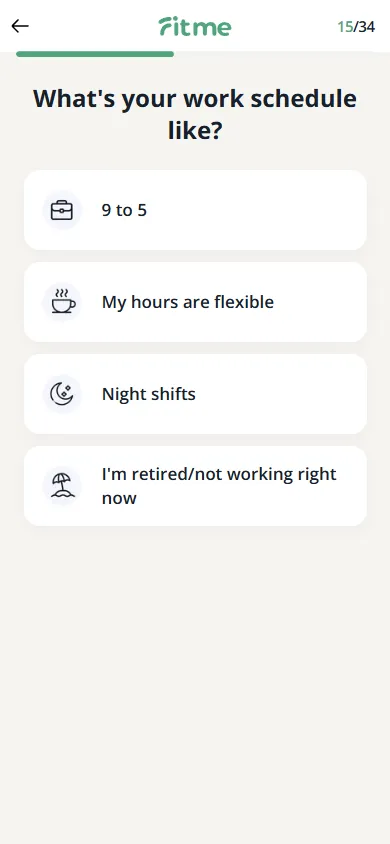
Work schedule — sets up the "fits your day" time promise. 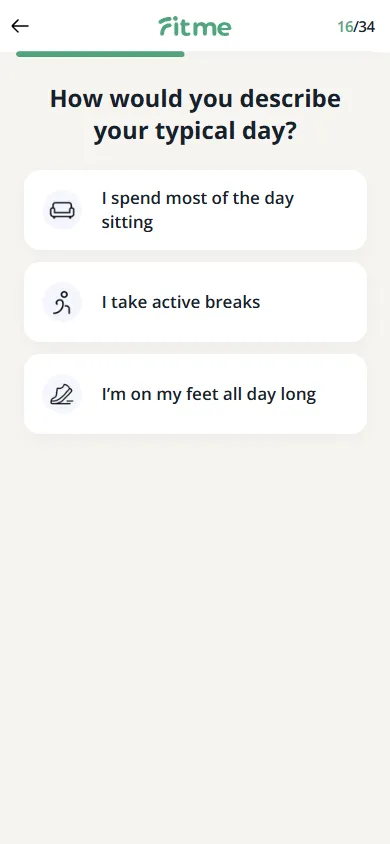
Typical day's activity (mostly sitting) — a sedentary answer reinforces the need. 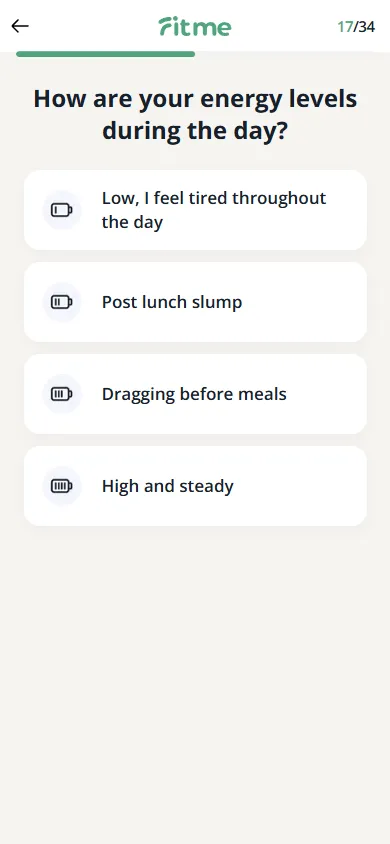
Daily energy levels — ties fitness to how you feel, not just to weight. 
Energy interstitial — "our program will help you feel more energized". 
Water intake — pivots into the lifestyle/habit questions the coaching angle leans on. 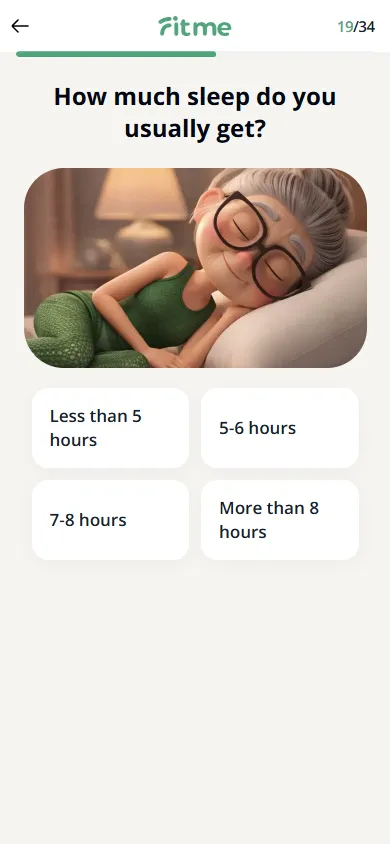
Sleep duration — a habit lever for the wellness narrative. 
Breakfast timing — first of three meal-timing questions feeding a "meal rhythm" claim. 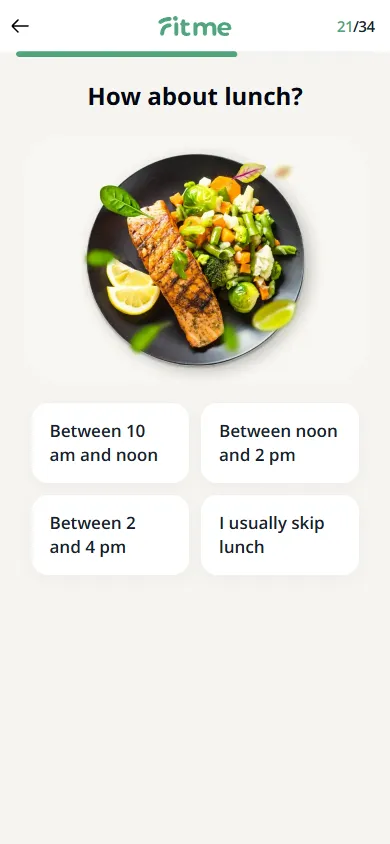
Lunch timing — continues the meal-schedule capture. 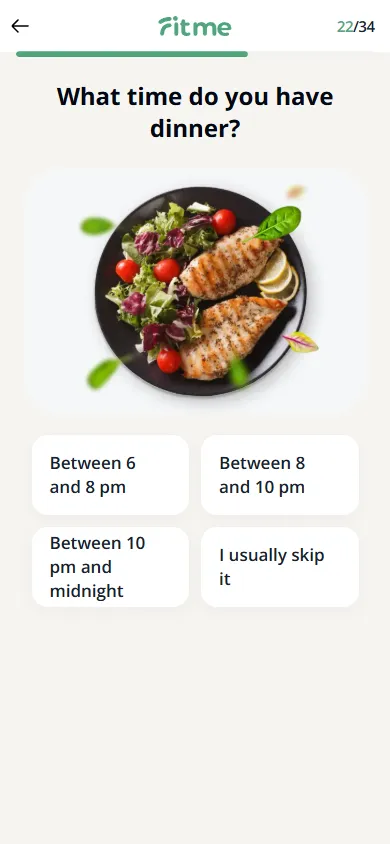
Dinner timing — completes the eating-window picture. 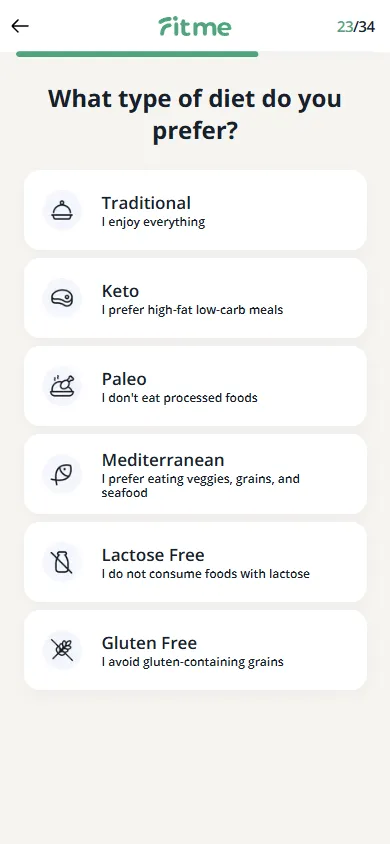
Diet preference — makes any nutrition tips read as personally tailored. 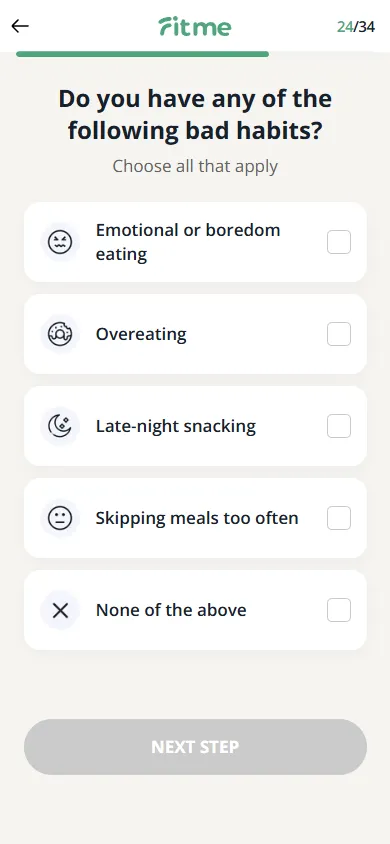
Bad habits (multi-select) — a gentle self-audit that quietly raises the stakes. 
Food cravings (multi-select) — an emotional-eating hook for the plan's promises. 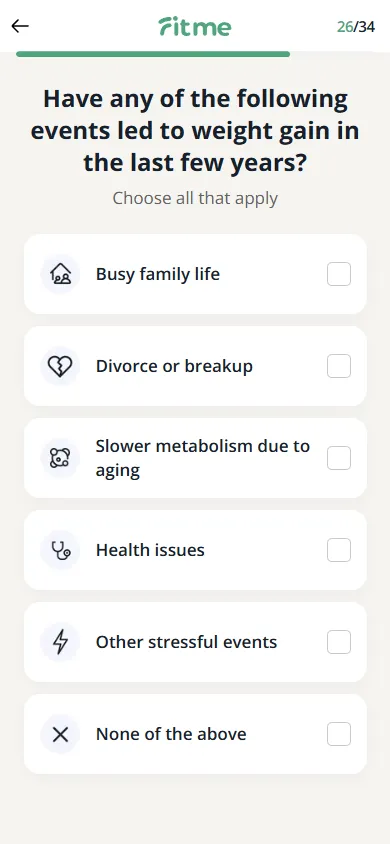
Life events behind weight gain (multi-select) — reframes past failure as circumstance, not fault. 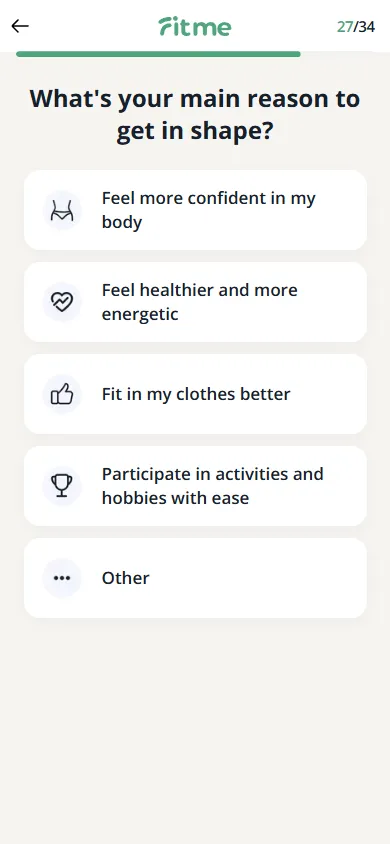
The deeper "why" (feel more confident) — the emotional payload the paywall will echo back. 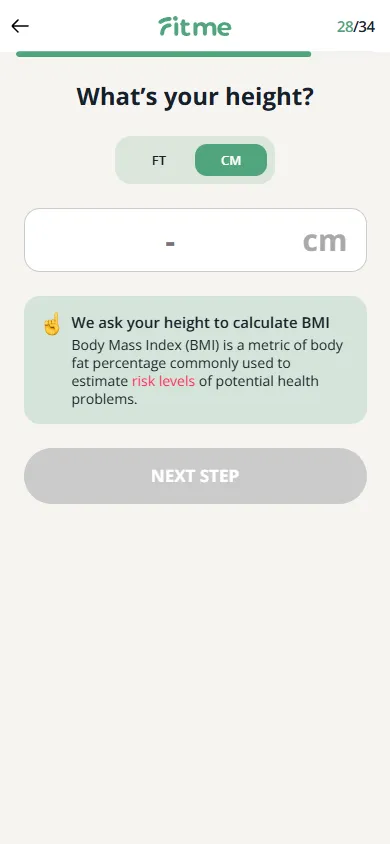
Height entry with a cm/ft toggle — the first typed input, "NEXT STEP" gated until valid, framed as needed "to calculate BMI". 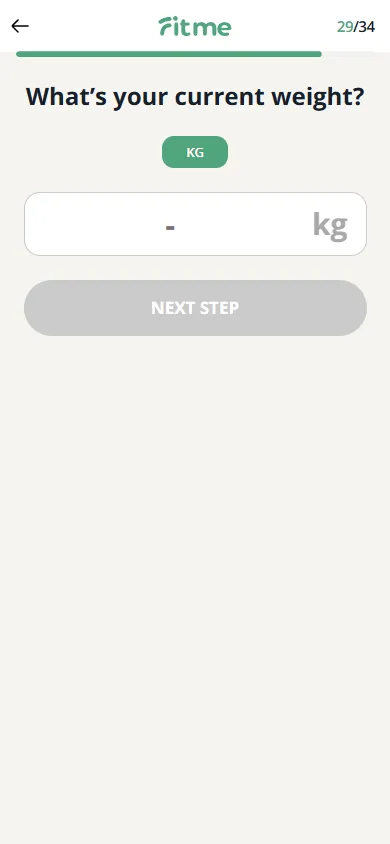
Current weight — a sensitive numeric input, required for the BMI reveal. 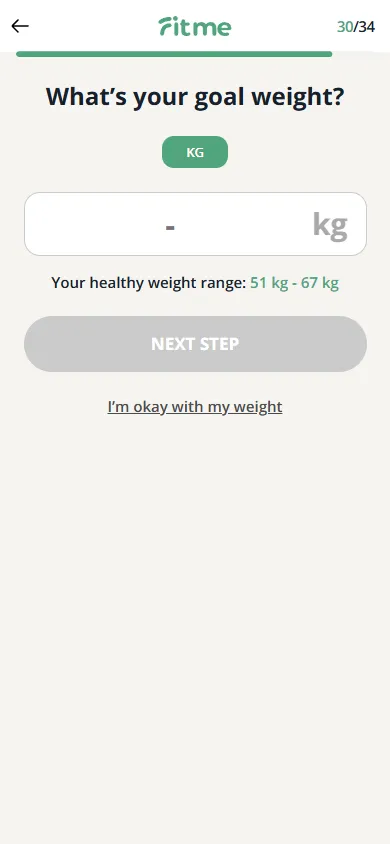
Goal weight — the target number the projected timeline is built from. 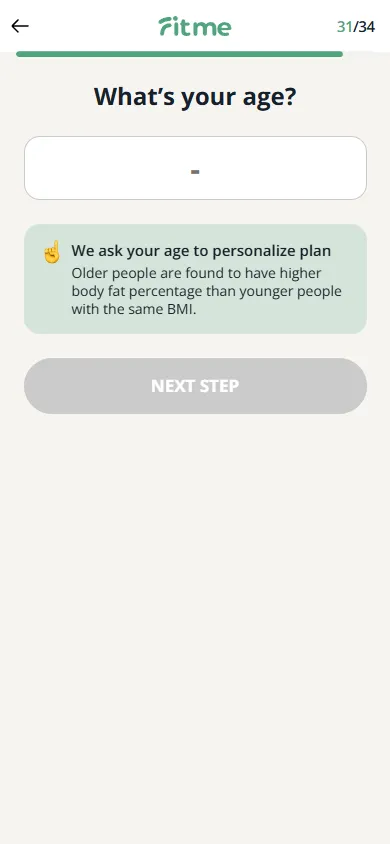
Exact age — a second, precise ask after the intro band, feeding the BMI/age framing. 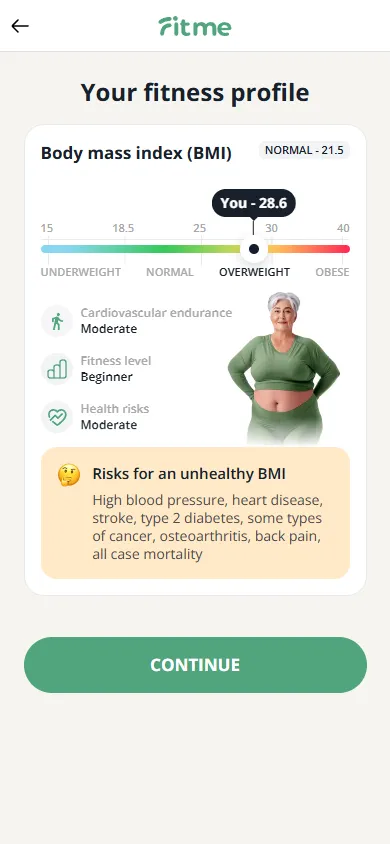
The payoff — a computed BMI dial ("28.6 — Overweight") with health-risk copy, built entirely from the answers just given. 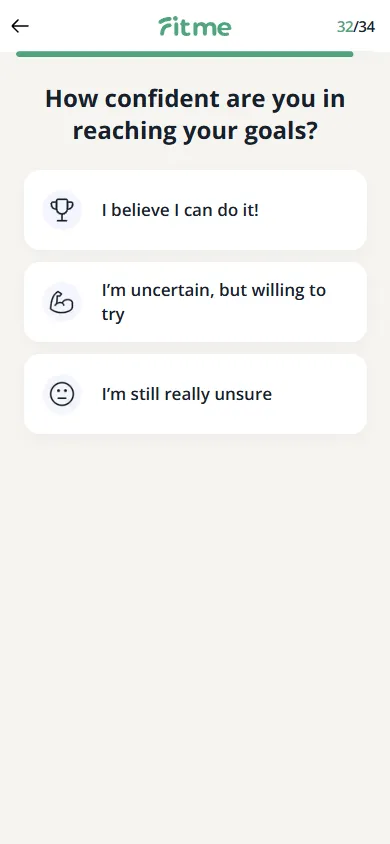
Confidence check — a final micro-commitment before the results are "prepared". 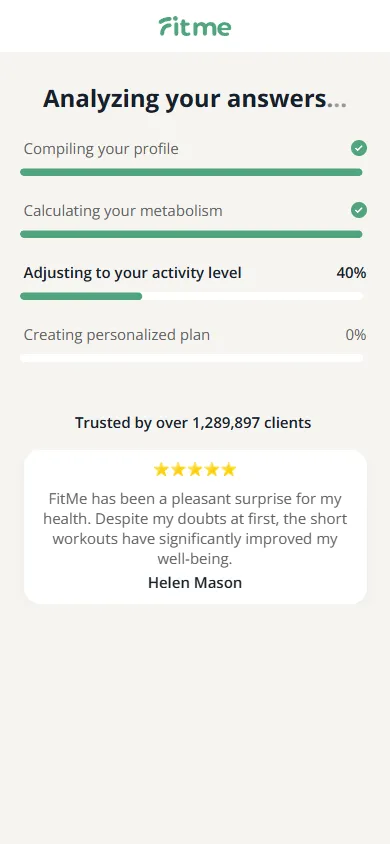
"Analyzing your answers…" loader — a manufactured wait that makes the plan feel computed just for you.