Salesforce State of Sales report (Salesforce) — a Lead magnet funnel teardown
ProductSaaS
TypeLead magnet
CategoryCRM software
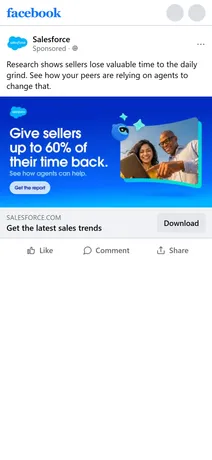
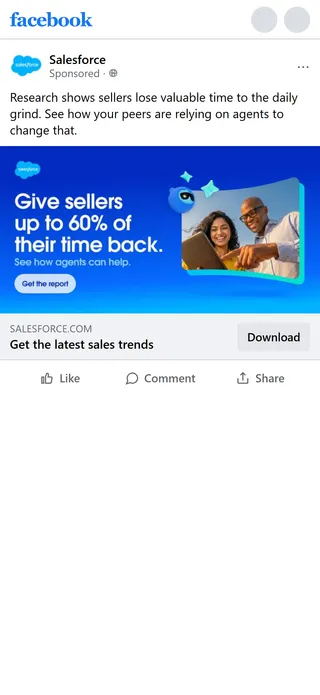
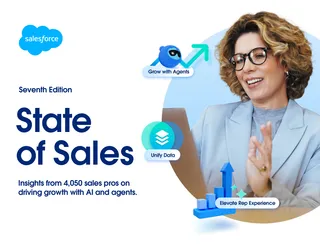
Salesforce’s seventh State of Sales report, advertised on Facebook and Instagram from the
Salesforce page since August 2026 and on Google Display. The ad says only “Get the latest sales
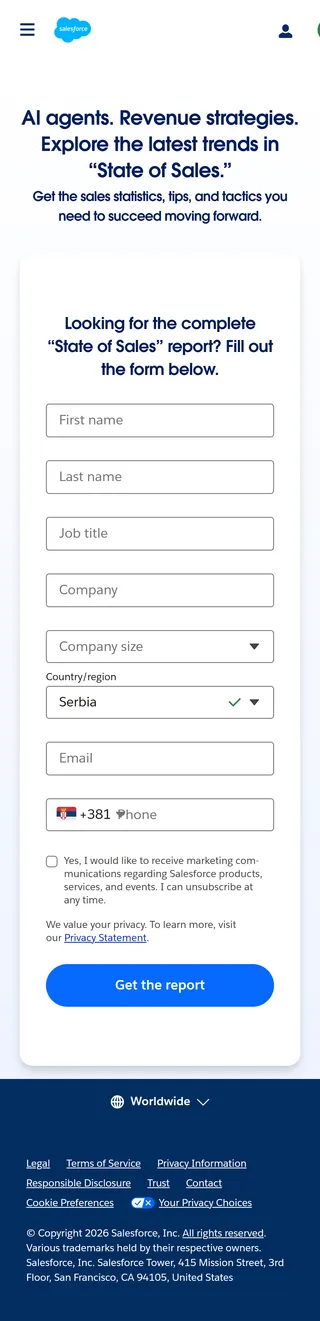
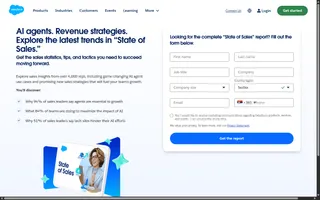
trends”. The landing page is one screen: three statistics, the cover, and an eight-field form
whose every field is required, phone included.
That form is the same on every gated offer Salesforce advertises, and it adjusts to the visitor’s
country: a European visitor is asked to tick a box for marketing; for a US visitor the box isn’t
there. Sending it opens the PDF directly. The report’s closing pages then point to more gated
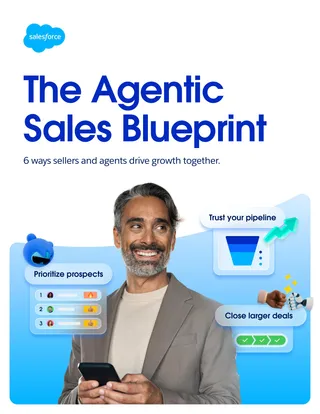
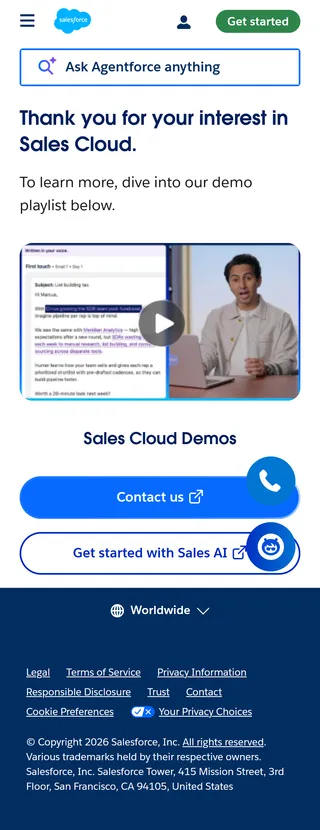
offers, and one of them, the Agentic Sales Blueprint, links to a demos page past its form.
Captured without submitting the form: every Salesforce form needs a phone number, and the capture
doesn’t invent one. Everything after the form was reached through the public addresses in the
pages’ source. The follow-up a real lead gets is still unknown.
Funnel canvas — drag to pan, scroll or use the buttons to zoom. Each node links to that step's page.
Every Salesforce ad link carries an objective code. This one is pgp-mtp, pipeline generation, the same code as the compensation report, the Blueprint and the calculator. The awareness ads (aw-bhv) and the newsroom ads link to pages without a form; the pipeline ads are the ones with a gate.
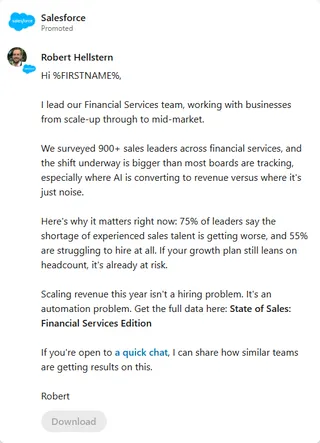
Facebook gets two lines and a Download button. LinkedIn gets the first three pages of the PDF in the feed, a sales leader’s customer story, and sponsored messages signed by named salespeople. Google gets a headline written as advice. All of them lead to the same 37 pages.
The State of Sales form is the same eight required fields, phone included, that guard the compensation report, the Blueprint, the ROI calculator and the Marketing Cloud demos. The size of the asset doesn’t change the price of it.
4
Consent set by country
The form picks the country from the visitor’s location. Outside the US it shows an unticked marketing box; set to United States, the box disappears and a State field appears.
Sending the form opens the PDF at once. No inbox to check, no delivery email to wait for: the lead gets the report and Salesforce gets the phone number in the same moment.
The report ends on four next steps, three of them gated. The Blueprint it points to ends with a link that skips the demos form, because by then the reader is a known lead.
Retain
Attract+2
Capture
Nurture
Sell
Made for a big screen
See all 11 steps as one map
On a computer this funnel opens as a canvas: every page at full length, side by side, with the arrows between them and the moves that make it work. A phone screen can't hold it, so here it's a list.
Every Salesforce ad link carries an objective code. This one is pgp-mtp, pipeline generation, the same code as the compensation report, the Blueprint and the calculator. The awareness ads (aw-bhv) and the newsroom ads link to pages without a form; the pipeline ads are the ones with a gate.
Facebook gets two lines and a Download button. LinkedIn gets the first three pages of the PDF in the feed, a sales leader’s customer story, and sponsored messages signed by named salespeople. Google gets a headline written as advice. All of them lead to the same 37 pages.
The State of Sales form is the same eight required fields, phone included, that guard the compensation report, the Blueprint, the ROI calculator and the Marketing Cloud demos. The size of the asset doesn’t change the price of it.
4
Consent set by country
The form picks the country from the visitor’s location. Outside the US it shows an unticked marketing box; set to United States, the box disappears and a State field appears.
Sending the form opens the PDF at once. No inbox to check, no delivery email to wait for: the lead gets the report and Salesforce gets the phone number in the same moment.
The report ends on four next steps, three of them gated. The Blueprint it points to ends with a link that skips the demos form, because by then the reader is a known lead.