How Simple’s quiz funnel works
Simple sells an AI weight-loss coaching app, and its funnel is the gallery’s clearest example of a quiz funnel run as a machine. Every part is tuned to the click in front of it, and none of it tries to be consistent with the rest.
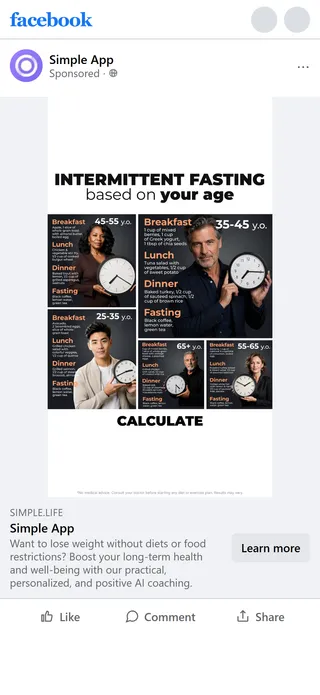
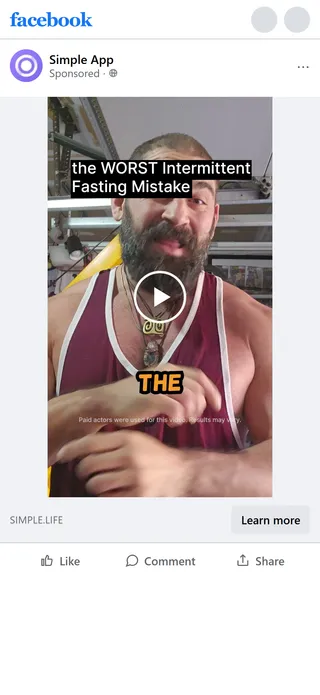
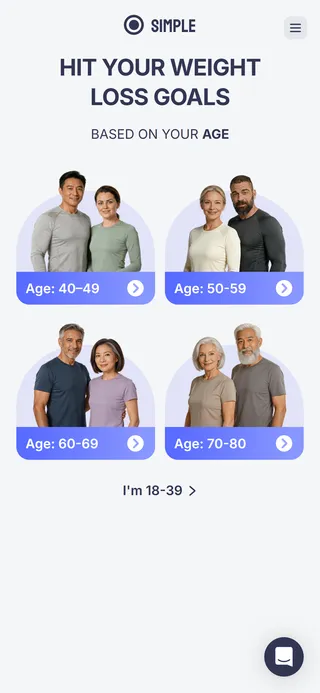
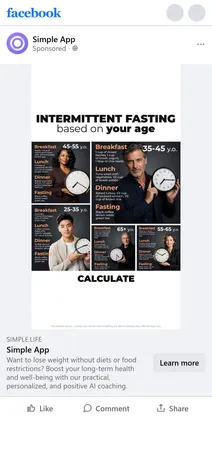
It starts with an ad you can’t read. The top 150 ads on Simple’s Facebook page (out of more than 50,000) are nearly all one device: a chart of plans by age or weight band, with text too small to make out and a button that says “Calculate” or “Tap your age”. Only the art style and the activity change: intermittent fasting, water fasting, walking, tai chi, chair tai chi, military calisthenics. Every ad goes straight to a survey on simple.life, and the survey opens on the question the ad asked.
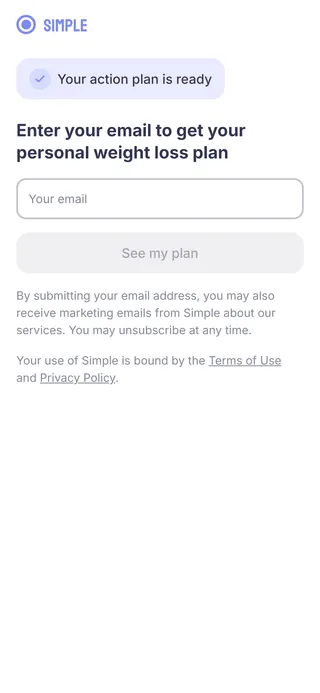
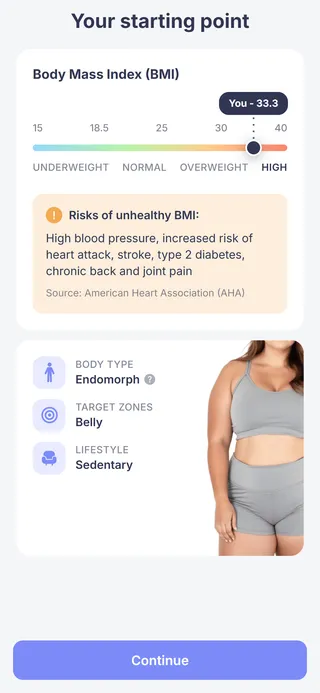
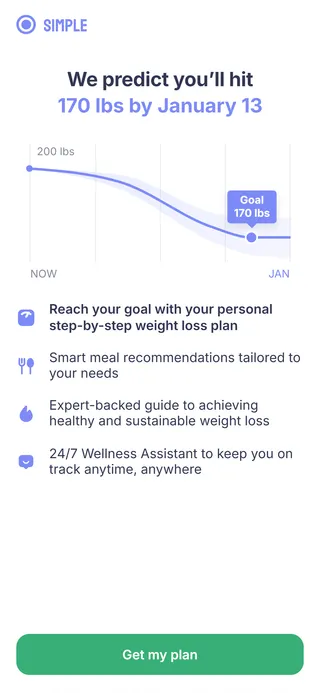
Then come 73 screens before the email. They ask about meals, sleep, children, motivation, competitors tried and medical history, and the survey hands the answers back as findings: a BMI with heart-attack risks, “your weight loss blockers” in percentages, a “future self” photo captioned with the word you picked. The email gate sits right after those findings and right before the prediction, so the address buys the plan you’ve just been told you need.
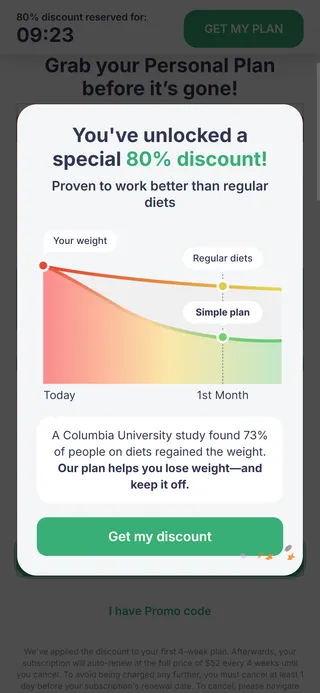
The paywall quotes your vacation back to you, then drops the price three times: a “jackpot” gift of 75% off on arrival, “You save 77%” at checkout, and “a special 80% discount” for anyone who closes the checkout. All of it renews at the $52 that nobody pays at first.
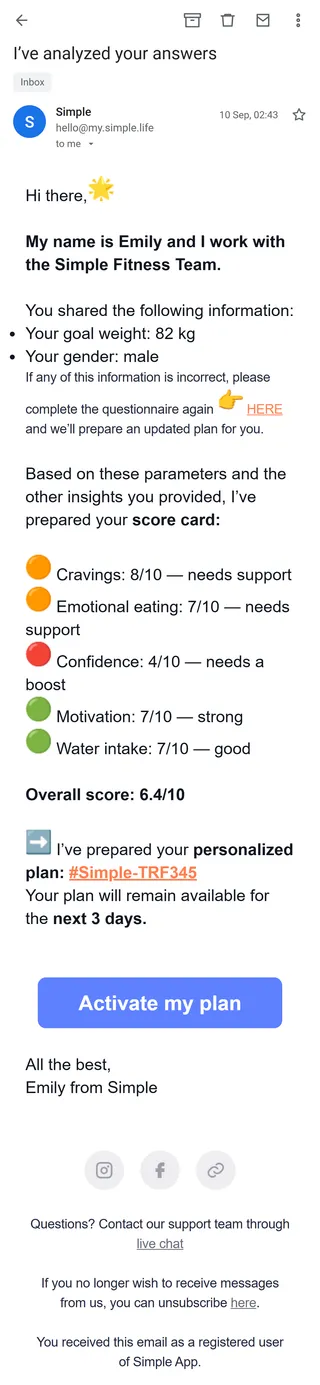
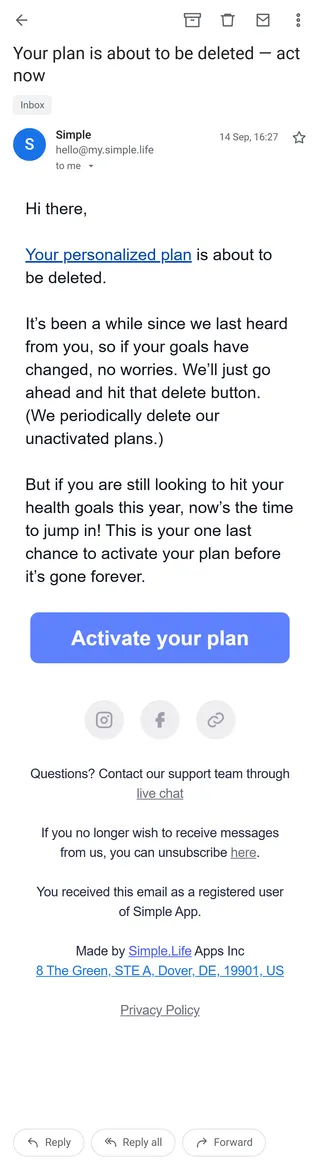
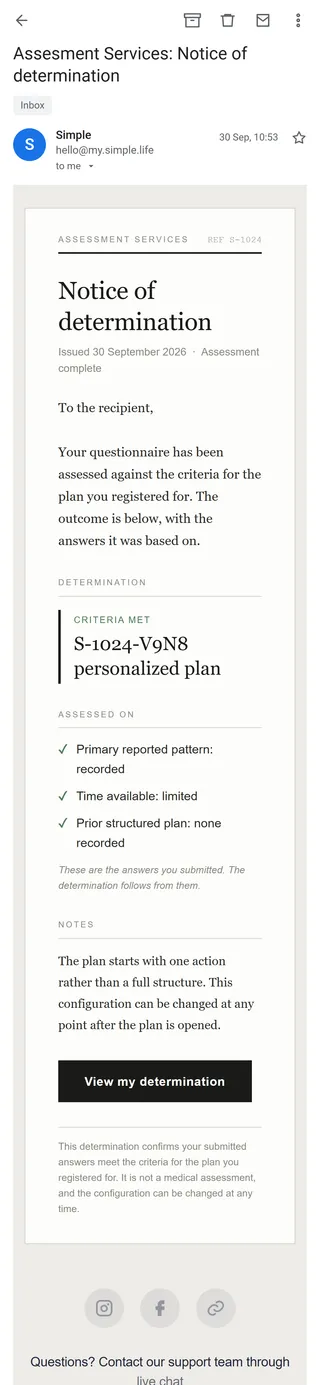
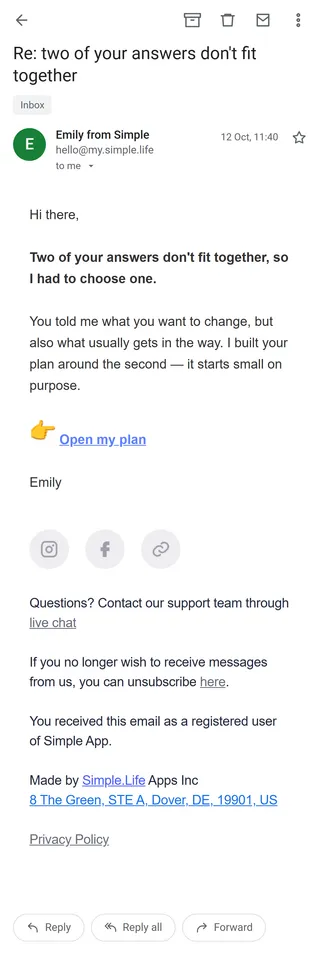
Not buying starts the second funnel. Someone who signs up and never pays receives 50 emails in 33 days: fake order confirmations, account-closure warnings, a “Notice of determination”, a nutritionist named Emily who has “analyzed your answers”. Each one is built to look like something that needs action, and each has one button back to the plan.
Seven more quizzes behind the ads
The survey on this page, /survey/, is the intermittent-fasting one and the biggest single
lane: 48 of Simple’s top 150 ads point at it. The other 102 go to seven more surveys,
one for each activity the ads sell, each with its own creatives and its own promise:
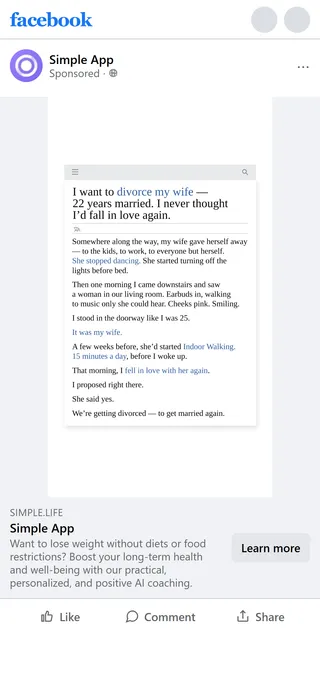
/survey/water-fasting(35 ads): “Do water fasting for 6 hours a day… In 7 days you will feel it, in 14 days you will see it”, “Water fasting explained like you’re 5”, and AI videos on how to “go from XL to M”./survey/walking(23 ads): “How much you should walk to drop your cortisol levels and lose 30 lbs”, with weight bands drawn as routes on a Central Park map, plus Spanish versions./survey/tai-chi-walking-f-v2(13 ads): “How much Tai Chi Walking you need to drain lymph, ease puffy legs, and lose 30 lbs”, aimed at women 50 to 75+./survey/military-calisthenics-f(12 ads): “Military calisthenics based on your age”, women in camo across age bands from 25 to 50+./survey/chair-tai-chi(7 ads): “Chair Tai Chi program for men over 50”, sold on cortisol and losing “a beer belly”./survey/walking-outdoor-f(6 ads): walking-map charts and the fake-article ads (“I want to divorce my wife”, “Dear past me: stop being invisible”)./survey/tai-chi-walking(6 ads): “How much should my grandma walk” and “restart a slow metabolism after 50”.
The URLs split the audience as well as the creative: the -f surveys carry women-only ads,
and chair tai chi is the one lane aimed at men. The ad is the same device in every lane, a
chart of plans by age or weight with a button to calculate yours, so each survey can open
on the question its ads have already asked.