How Noom sells GLP-1s
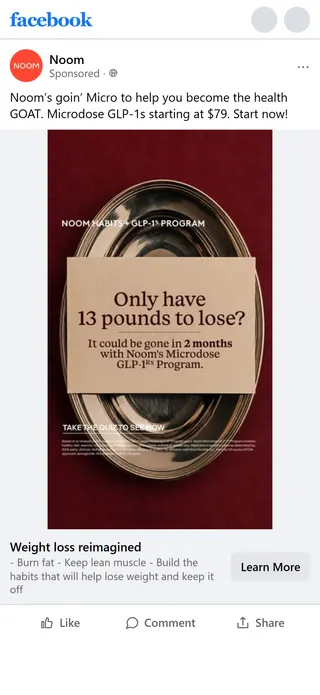
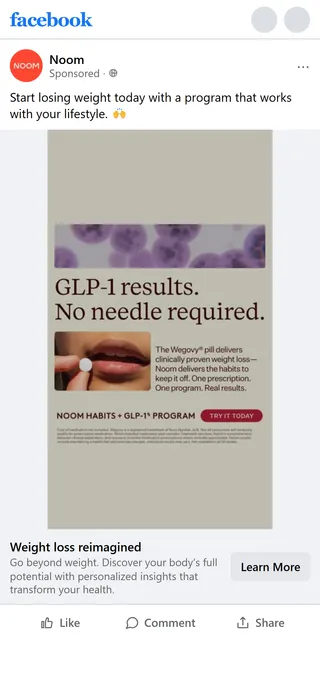
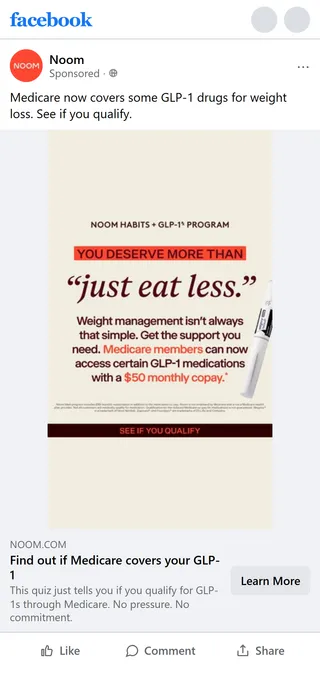
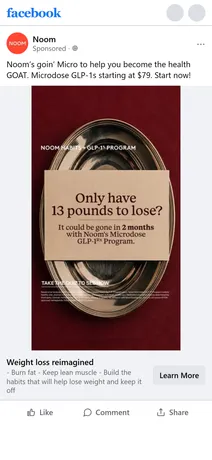
Noom built its name on a psychology-based weight-loss app sold through a long quiz. Its biggest ads in the US now sell prescription GLP-1 medication. Of Noom’s running US ads in October 2026, the 25 most-shown were all for medication: microdoses “starting at $79”, creator videos about starting a GLP-1, the Wegovy pill and Zepbound, and “Medicare now covers some GLP-1 drugs”.
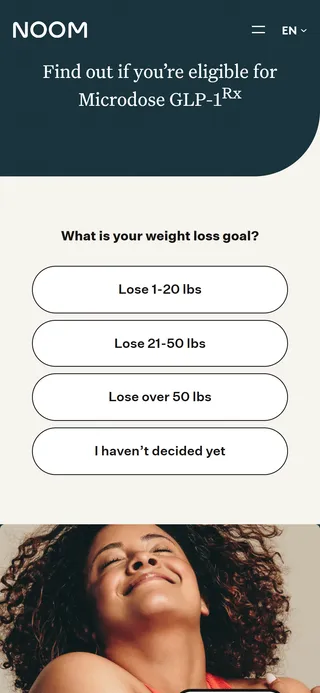
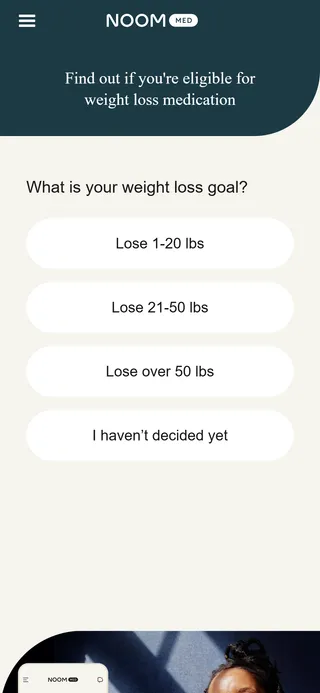
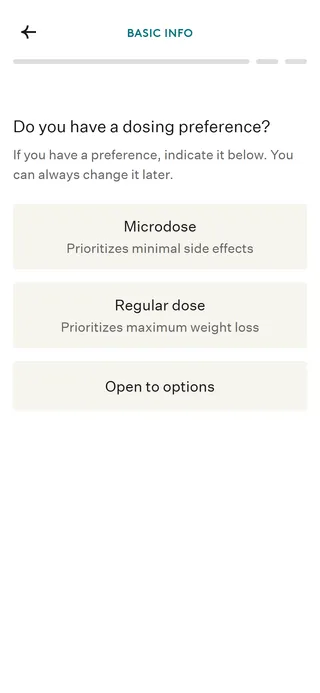
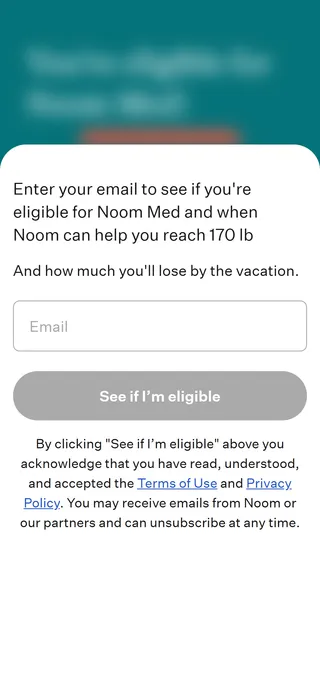
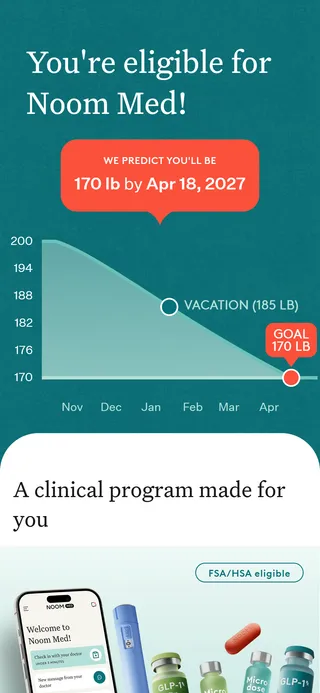
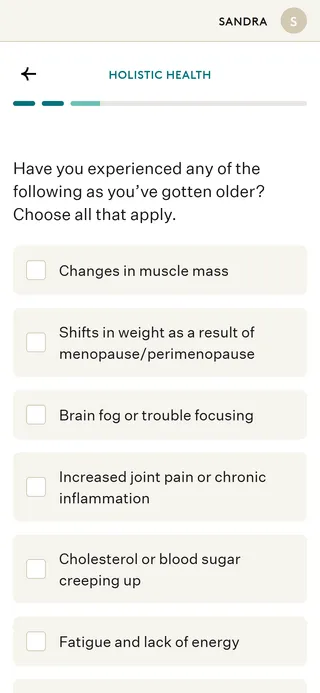
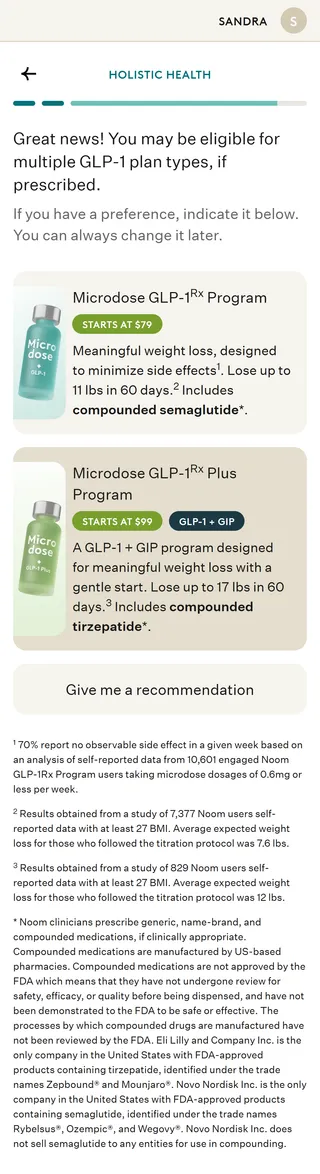
Each campaign has its own landing page, and every landing page opens on the quiz’s first question. From there the funnel is a medical intake laid out as a quiz. Screen two asks which dose you’d prefer, screen three which drug, with brand names as the answers. After that come the most you’ve ever weighed, a contraindication checklist and a zip code. It listens as it goes. Tick “cost” and “side effects” as the reasons you haven’t tried medication, and the next screen answers both: “plans starting at $39/mo”, “only 5% … discontinuing due to side effects”. The email gate announces “You’re eligible for Noom Med!” before it asks for the address.
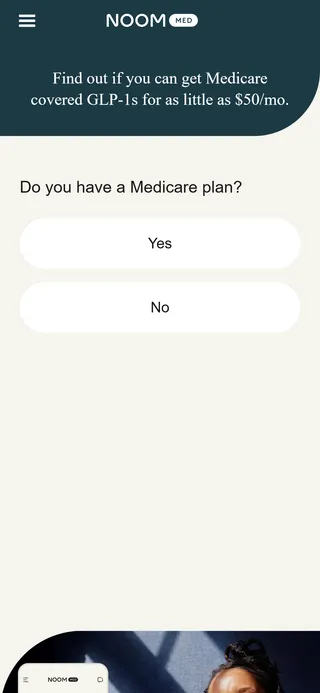
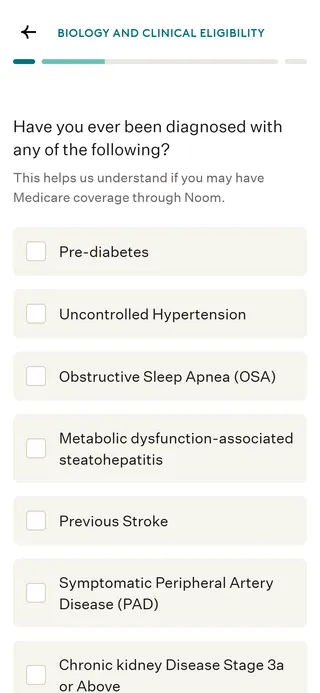
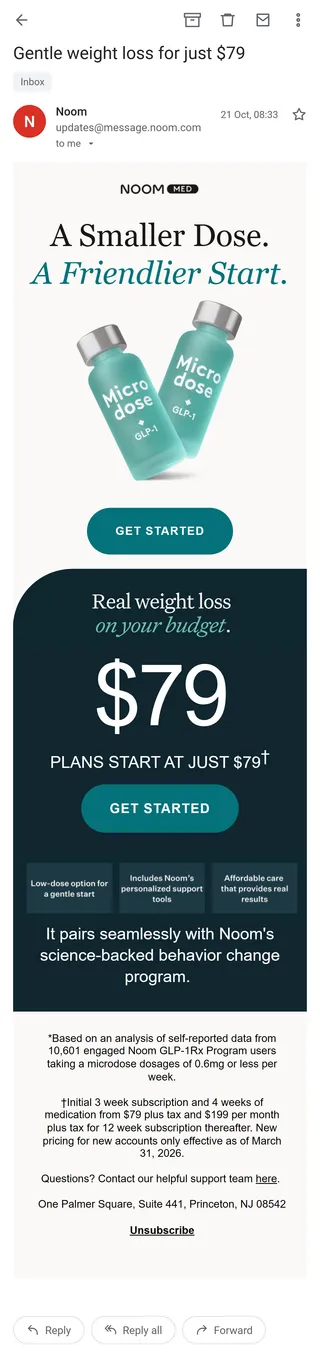
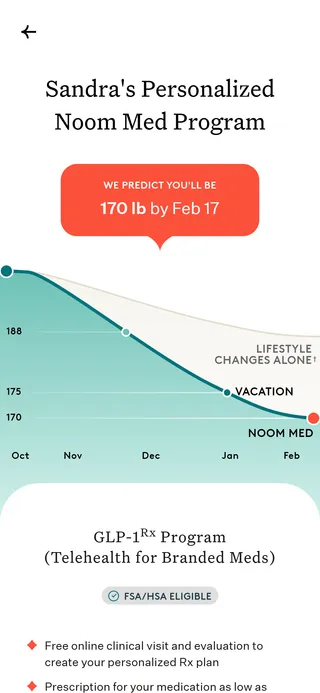
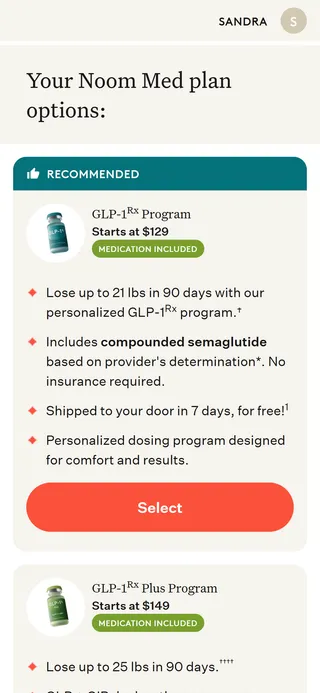
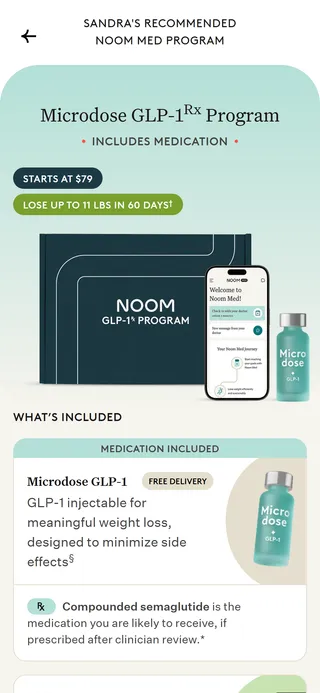
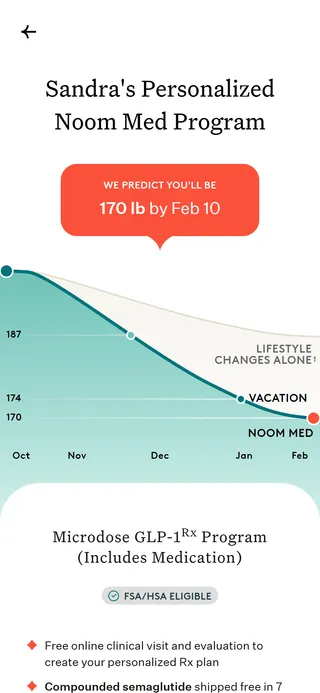
The plans are where the ads and the funnel part ways. The microdose ads’ “$79” is a three-week start, then $537 every 12 weeks, or $119 a month on a year’s commitment. The brand-name ads land on a page that lists the Wegovy pill and Zepbound “in stock”, and the plan it recommends is compounded semaglutide at $129. The brand names sit behind “See other options”, where the “$39/mo” from earlier turns out to be a prescription fee with “cost of medication not included”. The Medicare ad’s “$50/mo” is the copay a Medicare plan might charge for the drug, with Noom’s $129 a month on top, charged before Medicare has decided anything. And one of the qualifying conditions on Noom’s own list, sleep apnea, is turned away to the cash plans.
Throughout, the app is kept as the way out: “Not interested in medication? Try Noom Weight” appears on the eligibility screen and again at checkout.
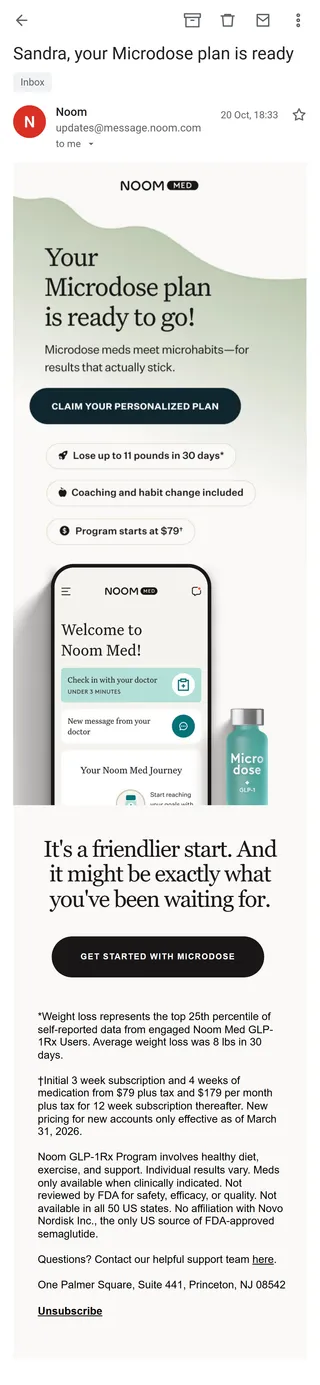
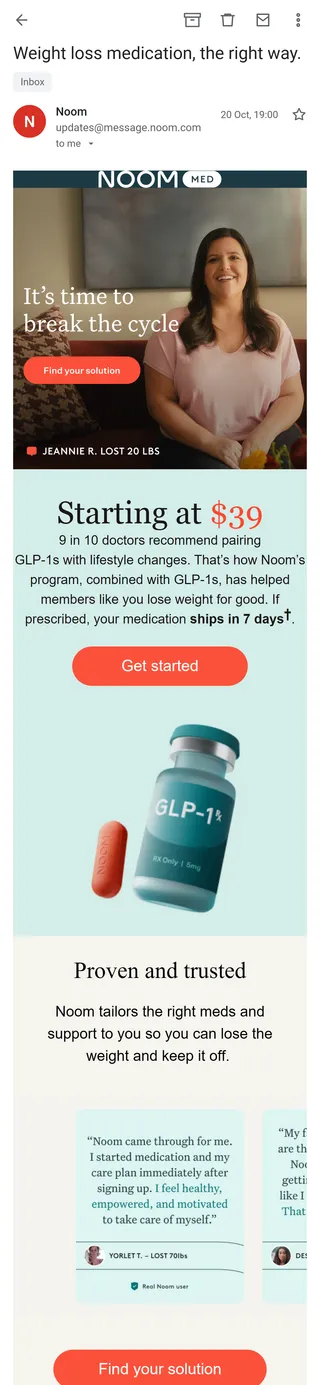
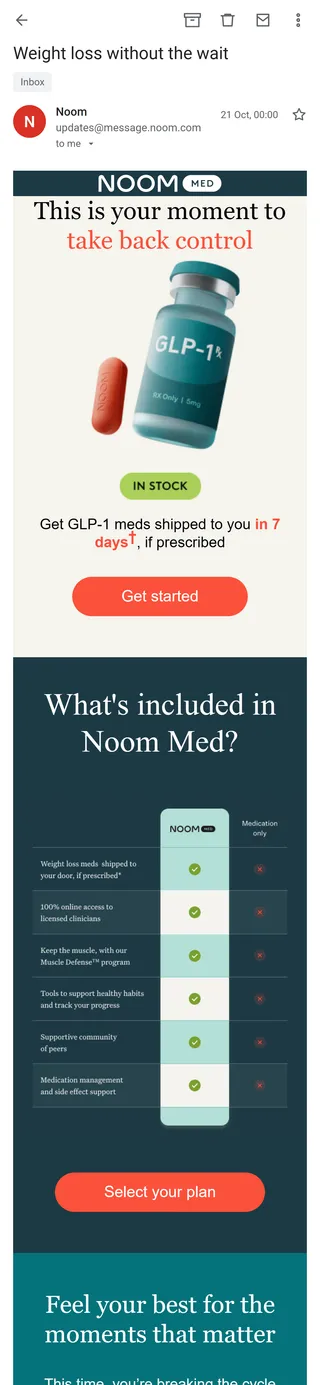
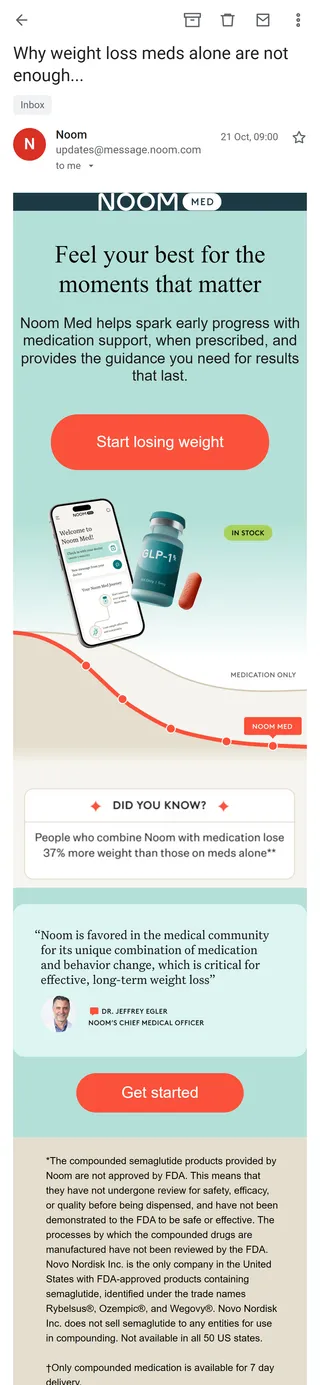
The emails split the funnel in two again, but by landing page, not by answer. Microdose visitors get the $79 restated with a larger result each time and no discount. Noom Med and Medicare visitors get one shared sequence, eligible or not, that opens on “Starting at $39” and never mentions Medicare: the $50 copay that brought them in is gone after the checkout.
Claims to read in the small print
The funnel quotes a lot of numbers, and the footnotes usually tell a smaller story:
- “-9 lbs in 30 days” and “Lose up to 11 lbs in 60 days” come from Noom users’ self-reported data; the averages in the same footnotes are 5.8 lbs and 7.6 lbs. The first email raises it to “11 pounds in 30 days”, with a footnote saying that is the top quarter and the average was 8.
- “-20% body weight” is from the clinical trials of branded Wegovy and Zepbound. The plan the funnel recommends is a compounded drug, which Noom’s own disclosure says is “not approved by FDA” and has “not undergone review for safety, efficacy, or quality”.
- “1.4X more weight loss with Noom Med” compares more engaged and less engaged Noom users, and the footnote adds “this association does not imply causation”.
- “We’ve helped 801,508 women in their 40s” is this funnel’s social proof. The app quiz, on the same site, says 3,627,436 people.